
YPC Media
The Future of Search Is Changing — But Don’t Panic, You’re Already Ahead

The Future of Search Is Changing — But Don’t Panic, You’re Already Ahead

Reading Time: 2 minutes

🌐 The Future of Search Is Changing — But Don’t Panic, You’re Already Ahead

If you’ve been following the tech world lately, you may have seen the big news: OpenAI has officially introduced ChatGPT Atlas, its new search experience. Atlas blends AI and the web in a way that’s changing how people find information online — and how businesses get discovered.

In fact, recent reports from Search Engine Land show that Atlas even mimics human clicks to test which links users are most likely to explore. That means AI tools like ChatGPT are no longer just answering questions — they’re actively shaping what people see when they search.

So what does this mean for your business? Let’s break it down.

🚀 Search Isn’t Just Google Anymore

For years, Google has been the go-to place for search — but that landscape is evolving fast. AI-powered systems like ChatGPT Atlas, Perplexity, and even voice assistants are becoming new “search layers” on top of the web.

Instead of typing a keyword and scrolling through links, users are now asking AI tools for recommendations — “Find me a local roofer,” “Best coffee near me,” “Affordable insurance in Rochester.”

If your business information isn’t accurate and consistent across the web, AI systems can’t confidently recommend you.

🧭 Why You Don’t Need to Stress (If You’re a YPC Customer)

Here’s the good news: if you’re on our Speedlisting or Speedlisting+ program, you’re already set up for this next phase of search.

Our platform ensures your business data is:
✅ Verified and consistent across 100+ directories and platforms
✅ Structured so that AI models and search bots can read it correctly
✅ Continuously updated to reflect changes in algorithms and data sources

That means whether someone searches on Google, Apple Maps, ChatGPT Atlas, or the next AI-powered assistant, your business has a foundation to be found.

💡 The Bigger Takeaway: Visibility Matters More Than Ever

AI-driven discovery is about trustworthy data. The more your information is confirmed across the web, the more likely these new search engines are to recommend you.

So while the tools may change — from Google searches to AI conversations — the principle stays the same:
If you can be found, you can be chosen.

🔍 Our Take

ChatGPT Atlas isn’t replacing Google overnight, but it’s signaling where things are heading. We’re entering an era where AI agents and assistants will surface local businesses based on verified online data, reviews, and authority — not just SEO tricks.

At YPC Media, we’re already building for that future.

If you’re not sure whether your business is optimized for AI search and beyond, reach out to our team. We’ll make sure your listings are working as hard as you are.

Google Is Phasing Out Call-Only Ads: What’s Changing, When, and How to Prepare

Google Is Phasing Out Call-Only Ads: What’s Changing, When, and How to Prepare

Reading Time: 3 minutes

Google Is Phasing Out Call-Only Ads: What’s Changing, When, and How to Prepare

Updated October 2025

Google is retiring Call-Only Ads and moving advertisers to Responsive Search Ads (RSAs) with call extensions. New Call-Only Ads can’t be created after February 2026, and all existing Call-Only Ads will stop serving in February 2027. If you rely on phone calls for leads, now is the time to build (or update) a lightweight landing page, move to RSAs, and tighten your call tracking so you don’t lose visibility into performance.

What’s Happening (and When)

  • February 2026: Google will disable the creation of new Call-Only Ads.
  • February 2027: All existing Call-Only Ads will stop serving. Advertisers must transition to RSAs with a call extension.

Google’s official announcement is here: Google Support – Call Ads changes.

What This Means for Advertisers

Practically, you’ll need to send users to a web page (landing page or site) and present a prominent click-to-call option via your ad’s call extension and on-page buttons. Calls won’t be the only action anymore—users can browse, bounce, or convert via form—so your funnel and tracking need to account for that.

Potential Risks

  • Mandatory landing page: Every location or agent needs at least a baseline site or dedicated landing page to use RSAs.
  • Possible dip in call ratio: Calls are no longer the sole path. Expect some users to click through, skim, and leave. Your on-page call UX must be unmistakable.

Hidden Opportunities

  • Reduced competition (now–Feb 2027): During the wind-down, advertisers who keep compliant Call-Only inventory running could see less auction pressure before the full sunset.
  • Broader device reach: RSAs show on all devices (not just mobile), potentially unlocking older or desktop-first audiences with strong buying power.
  • Better remarketing: Once users land on your page, you can tag them for follow-up (e.g., “Still need an insurance quote? Call 888-888-8888.”).
  • Multi-channel expansion: If you’re building a call-optimized page anyway, it becomes easier to extend into Bing and programmatic without duplicating effort.
  • Website/landing page upsell: The destination URL requirement creates a natural pathway to invest in custom pages that convert.

Tracking & Compliance

To keep cross-device attribution intact (e.g., desktop searchers who pick up their phone to call), implement dynamic call tracking such as Invoca. You can disable call recording if needed for privacy, while still tracking call volume and duration. This helps preserve reporting continuity as formats shift.

Landing Page Requirements (the Essentials)

  • Above-the-fold call action: A tappable phone number and a high-contrast “Call Now” button should be immediately visible on mobile and desktop.
  • Fast, lightweight build: Aim for sub-2s mobile load. Compress images, lazy-load below-the-fold assets, and keep layout simple.
  • Backup form: Offer a short form for users who prefer not to call. Only include fields your team can follow up on quickly.
  • Trust elements: Add badges, reviews, and clear service areas to reduce hesitation and encourage the call.
  • Tracking tags: Install Google/GA4, ad platform tags, and call tracking snippets before launch.

Who’s Most Impacted?

We expect the biggest operational impact for insurance advertisers that heavily relied on Call-Only formats (e.g., individual agency/agent campaigns that never needed a destination URL). For other industries (e.g., service providers already using RSAs + call extensions), the transition is typically simpler.

Quick FAQ

Do I have to build a full website?
Not necessarily. A fast, single-purpose landing page per location can be enough if it clearly drives calls and captures leads for non-callers.

Will my call volume drop?
Some advertisers see a lower call ratio initially because users now have more options. Strong on-page call UX and clear value props help offset this.

What about compliance and recording?
You can track calls without recording audio. Configure call tracking to align with your privacy and regulatory requirements.

Need Help Transitioning?

If you rely on phone calls for revenue, don’t wait. We can build a conversion-ready landing page, migrate your campaigns to RSAs with call extensions, and implement accurate call tracking—so you keep phones ringing while gaining better data.

Why Apple’s “World Knowledge Answers” Will Change Search—And What Service-Based Businesses Need to Do

Why Apple’s “World Knowledge Answers” Will Change Search—And What Service-Based Businesses Need to Do

Reading Time: 2 minutes

Why Apple’s “World Knowledge Answers” Will Change Search—And What Service-Based Businesses Need to Do

Apple is stepping into the search game in a big way. In spring 2026, Apple will roll out World Knowledge Answers, an AI-powered search engine that integrates directly into Siri, Safari, and Spotlight. Unlike traditional search, this “answer engine” is designed to give users quick, AI-generated responses that blend text, images, video, and local insights.

With more than 2.35 billion active Apple devices worldwide, even small shifts in Apple’s default search could move billions of queries away from Google. The businesses that adapt now will win visibility where their competitors don’t even show up.


What Is World Knowledge Answers?

Think of it as Apple’s version of ChatGPT meets Google Search—but baked into every iPhone, iPad, and Mac.

  • AI-powered summaries: Apple’s engine condenses complex information into clear, digestible answers.

  • Multimodal results: Responses won’t just be text—they’ll include images, video, and interactive elements.

  • Competition for AI search: Apple is positioning Siri as a serious competitor to tools like Perplexity and ChatGPT.

  • Built on LLMs: Apple is reportedly using Google’s Gemini for some summarization tasks, while developing its own in-house models for data control and privacy.

This isn’t just another algorithm tweak. It’s a complete reimagining of how users discover businesses and information inside the Apple ecosystem.


The Problem for Service-Based Businesses

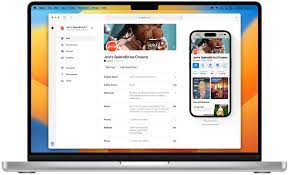
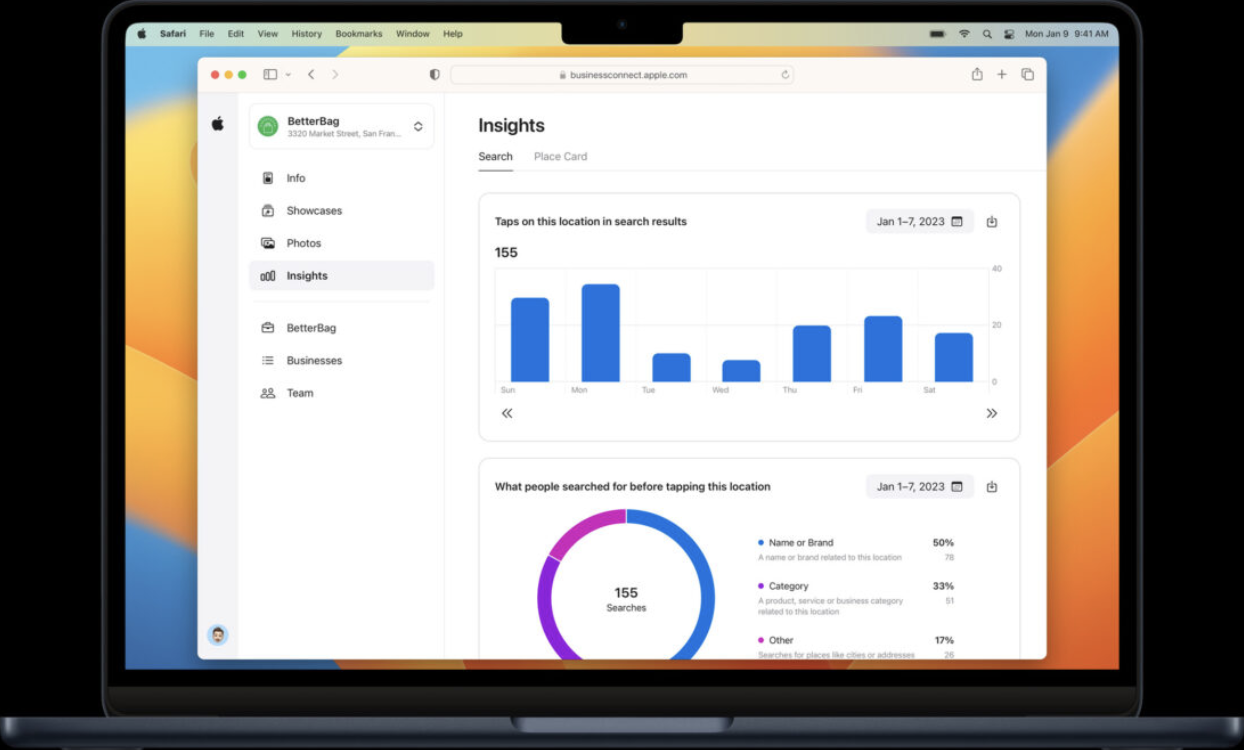
Apple’s ecosystem already favors location-based businesses through Apple Business Connect (similar to Google Business Profile). Restaurants, gyms, and salons show up automatically in Apple Maps and Siri results.

But here’s the gap:

  • Service-based businesses without a storefront—consultants, agencies, contractors, and B2B providers—often don’t appear.

  • Apple prioritizes map listings and local results, leaving non-location businesses invisible in search.

  • Even if a customer searches for your services, you may not show up at all—unless you take extra steps.


How Service Businesses Can Get Found on Apple

If you’re a service provider, you can’t afford to wait for Apple’s search rollout. Here’s how to prepare now:

  1. Register with Apple Business Connect – Even without a storefront, claiming your profile signals legitimacy to Apple’s system.

  2. Optimize for AI answers – Add 40–60 word summaries at the top of your service pages so Apple’s AI can pull quick responses.

  3. Ensure your listings on top aggregators and listing sites are claimed and accurate – Build authority and dependability with other sources that Apple will likely pull from.

  4. Leverage visuals with alt text and captions – Apple’s multimodal search means your images and graphics can help you rank.


Why This Is Urgent

Apple is redefining how people search. If your business isn’t prepared, you’ll be invisible in billions of Apple-powered queries. Service-based businesses already face challenges in visibility—don’t let Apple’s AI search push you further behind.

At YPC Media, we specialize in helping service businesses compete in every search environment—Google, Apple, Siri, and beyond. Our exclusive marketing model means we work with only one business per industry per area, giving you the competitive edge your competitors can’t buy.

📲 Want to make sure your business shows up in Apple’s AI-powered search? Contact YPC Media today to get started.

Instagram is Now Indexing on Google: 5 Things Your Business Needs to do

Instagram is Now Indexing on Google: 5 Things Your Business Needs to do

Reading Time: 2 minutes

Big news in the world of SEO and social media: As of July 10, 2025, Google is officially indexing Instagram posts. That means your content on Instagram now has the potential to show up in Google Search — not just in the Instagram app. This is a huge shift for visibility, discoverability, and brand credibility.

Here are 5 things your business needs to keep in mind now that Instagram is part of the Google index:


1. If your business isn’t on Instagram, it’s time.
Even if you don’t post daily, just having a business account means you can start showing up in search results. No account = no chance of being found. At the very least, claim your handle and optimize your bio.


2. Your captions matter more than ever.
Captions = keywords. Google’s bots can now “read” your text. So instead of just emojis and hashtags, think about writing clear, searchable captions. Include what you do, who you help, and where you’re located.


3. Optimize your handle and username.
Google needs more context. Consider tweaking your handle or display name to include your business category or location.


4. Use alt text on your images.
Instagram lets you add alt text — and now that Google can see IG content, this is your chance to boost accessibility and SEO. Use descriptive keywords in your alt text just like you would on a website.


5. Consistency = visibility.
Just like Google ranks websites based on freshness and authority, your Instagram content could benefit from a consistent posting schedule. The more relevant, high-quality content you publish, the better chance you have of ranking.


Final Thought:
Instagram is no longer just a social platform — it’s now a searchable part of your brand’s online footprint. Treat your Instagram like a mini-website, and you’ll be setting yourself up for better visibility across both social and search.

Want help optimizing your IG for SEO? We can do it for you! Hit the contact button and let’s get started.

How Long Does It Take for Google Business Profile Optimization to Work?

How Long Does It Take for Google Business Profile Optimization to Work?

Reading Time: 2 minutes
Optimizing your Google Business Profile (GBP) is one of the most powerful things you can do to improve your local search visibility—but how long does it actually take to start seeing results? If you’ve recently updated your profile or are planning to, you might be wondering when the calls, clicks, and new customers will follow. In this post, we’re breaking down the typical timeline for GBP optimization to kick in, what factors affect how fast it works, and what you can do to speed up the process.
⏰ Typical Timeline
Immediate (0–1 week):
Edits (like business hours, photos, services) usually go live within 24–72 hours.
You might see a small uptick in impressions right away if your changes improve relevance.
Short-Term (2–4 weeks):
Google starts re-crawling your profile more regularly.
Your visibility in the Local Map Pack and search results may start to improve, especially if your updates include categories, keywords, and service areas.
Medium-Term (1–3 months)
Meaningful improvements in rankings, traffic, and calls typically show up during this window.
Regular updates (posts, reviews, Q&A, photo uploads) and engagement with users help build trust signals
Long-Term (3–6+ months):
Your GBP becomes more dominant in local search results if you stay consistent.
Competitive markets take longer—especially if your competitors are active too.

🧩 Factors That Impact Speed

  • Competition in your industry/location

  • Review frequency and quality

  • Website SEO and alignment with your GBP

  • Proximity to searchers

  • Activity on your profile (posts, updates, responses)


🔄 What Helps It Work Faster

  • Add high-quality photos

  • Use relevant keywords in your business description and services

  • Regularly post updates (even once a week is helpful)

  • Respond to all reviews

  • Encourage new 5-star reviews regularly

  • Fill out every section of the profile

While results from Google Business Profile optimization aren’t instant, the impact can be significant when done right and maintained consistently. Think of it as a long game that builds local credibility and trust over time. By staying active on your profile, encouraging reviews, and aligning your GBP with your overall SEO strategy, you’re setting your business up to win in local search—week after week, month after month. Be patient, stay consistent, and your efforts will pay off.